



Is land banking truly a low-risk investment or a ticking financial time bomb?
People often say, “Just buy land and relax.”
But what if that “safe land” is quietly turning into your most expensive mistake?
In 2023, a close friend of mine Chike, a hardworking engineer saved up ₦8 million and bought two plots of land in an “upcoming” area near Epe. The agent assured him the land had a Certificate of Occupancy and even called it “the next Lekki.”
Fast forward to 2026.
Chike went to fence the land, and suddenly local landowners showed up with weapons, claiming it was family land.
Long story short:
The land had been sold twice
The documents were fake
The case has been in court for three years
The money is gone
The stress is overwhelming
Meanwhile, another friend bought land in a properly documented estate in Kobape around the same time. Today, the value of that land has tripled.
The truth is simple: land banking is easy, but it is not automatically safe.
Many people confuse “buy and wait” with “guaranteed profit.”
And that’s where the trouble begins.
What Is Land Banking?
Land banking is a simple investment strategy. You buy raw land in a developing area usually where there are no buildings yet and hold it while population growth, infrastructure, and development increase its value.
Later, you can either:
Sell it at a higher price
Build on it
Lease it for development
In Nigeria, especially around Lagos, Ogun, Epe, and Ibeju-Lekki, land banking is widely promoted as a safe investment.
And yes, land does not depreciate like cars or gadgets.
But here is the key truth:
“Safe” does not mean “risk-free.”
Understanding this difference is what separates smart investors from regretful buyers.
The Untold Risks of Land Banking
Let’s talk honestly about the risks many marketers never mention.
1. Fake Titles and Documents
One of the biggest problems in land investment is forged documentation.
Unscrupulous agents sometimes create fake:
- Certificates of Occupancy
- Governor’s Consent
- Survey plans
You may believe your documents are genuine until someone else appears with stronger legal papers.
Unfortunately, double sales of land are common in some areas.
2. Government Revocation
Another hidden risk is government acquisition.
The government can reclaim land for:
- Roads
- Housing estates
- Infrastructure projects
- Public facilities
When this happens, compensation may be:
- Delayed
- Incomplete
- Or never paid
- Meaning your investment may disappear overnight.
3. Litigation Traps
Land disputes often end up in court battles.
Once a property enters litigation, you may face:
- 5–10 years of legal processes
- No ability to sell the land
- No ability to build on it
- Legal expenses piling up
Meanwhile, inflation keeps reducing the value of your money.
4. Buying in the Wrong Location
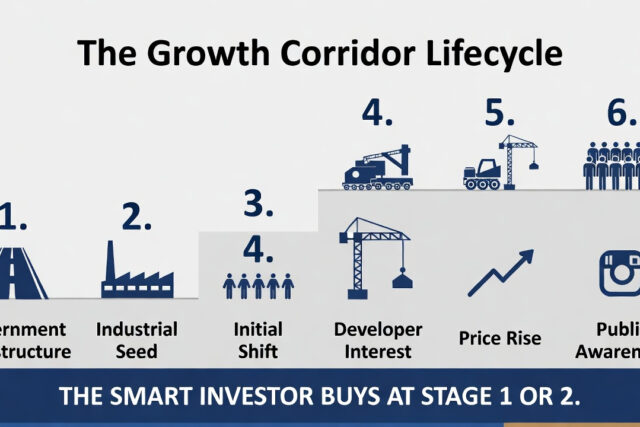
Another common mistake is buying land where development never comes. Many investors buy in places marketed as “the next big thing.” But ten years later, the land may still be surrounded by bush with no infrastructure.
In that case, appreciation becomes very slow or nonexistent.
How to Reduce the Risk
Land banking can still be profitable but only if you do it carefully.
Here are some ways to protect yourself:
✔ Verify the title through a real estate lawyer at the land registry
✔ Confirm excision, gazette, or global Certificate of Occupancy
✔ Buy land inside verified estates with proper documentation
✔ Avoid deals that seem too cheap to be true
✔ Work with developers with proven track records
These steps may cost a little more upfront, but they can save you millions in the long run.
Why Land Banking Still Makes Sense
Despite the risks, land banking remains one of the most powerful long-term wealth strategies in Nigeria. When done correctly, returns can be massive. In some fast-growing locations like Kobape and the Sagamu axis, investors have recorded 300–500% returns within 5–7 years.
With population growth, new roads, and expanding cities, land demand continues to rise.
But remember:
The opportunity is real but so are the hidden risks.
Smart investors don’t just buy land and wait.
They verify, research, and invest wisely.


Leave a Reply