

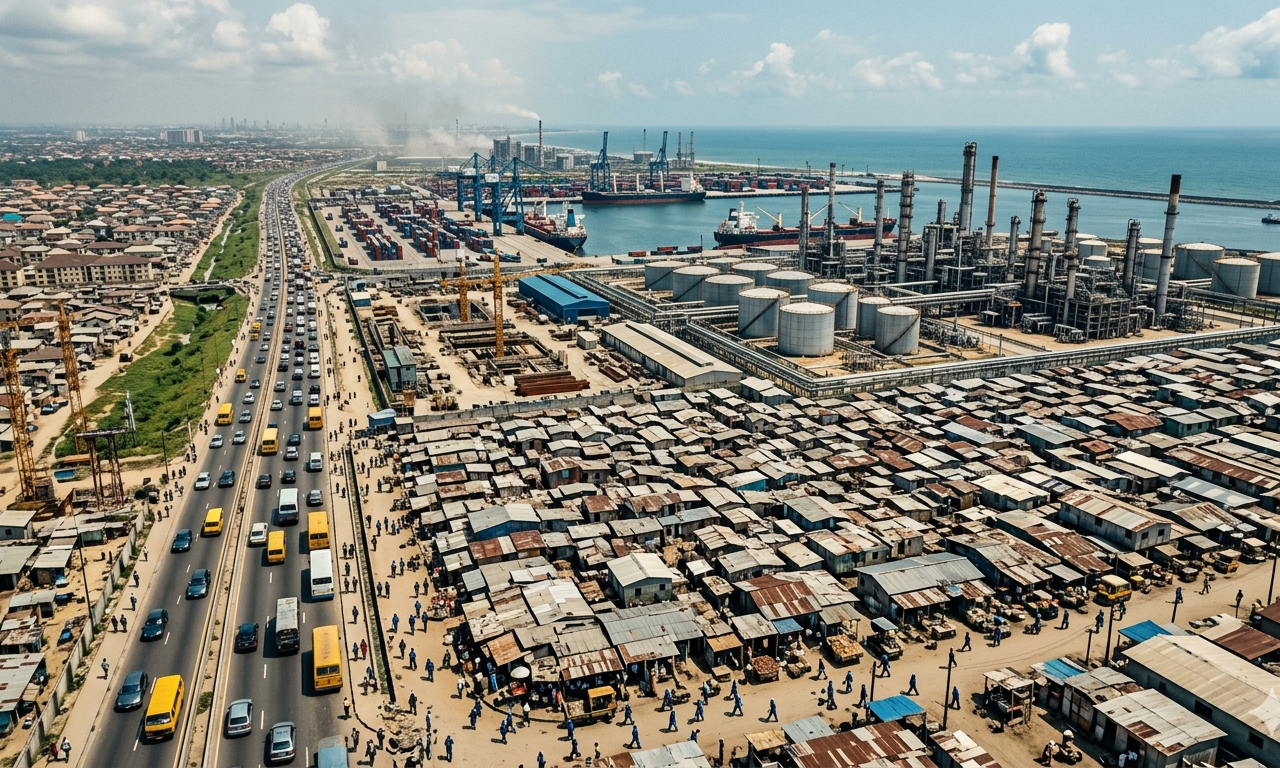

While headline-grabbing luxury high-rises continue to alter the skylines of traditional metropolitan centers like Ikoyi and Victoria Island, a far more intense structural crisis is quietly unfolding along Nigeria’s rapidly expanding industrial corridors. The unprecedented influx of manufacturing, logistics, and processing enterprises into dedicated sub-regional zones has triggered a massive, compounding demographic shift, one that the local real estate market is fundamentally unequipped to handle.
For decades, Nigeria’s housing deficit stubbornly estimated in the tens of millions was framed primarily as an amorphous municipal problem centered around downtown cores like Lagos Island, Mainland Lagos, or central Abuja. However, structural economic changes over the last decade have shifted the epicenter of urgency.
Today, the most acute mismatch between shelter demand and supply is concentrated along the industrial ribbons spanning the Lekki-Epe corridor, the Lagos-Ibadan expressway clusters (such as Mowe, Ibafo, and Sagamu-Interchange), and the Agbara-Ota industrial axis. Driven by billions of dollars in private and public capital expenditure, these zones have become economic powerhouses, yet they risk becoming victims of their own success due to a critical missing ingredient: worker housing.
1. The Gravity Shift: Capital Precedes Human Habitats
The genesis of this crisis lies in a fundamental structural imbalance: industrial capital deployment moves at a much faster pace than real estate development. When major anchor infrastructures such as the Dangote Petrochemical Complex, the Lekki Deep Sea Port, the food processing clusters in Sagamu, and the manufacturing plants in Agbara were conceptualized, the core focus was operational optimization.
Land was allocated for factories, refineries, warehouses, and customs processing. However, the human ecosystem required to power these massive installations was largely left to the whims of the informal real estate market. As a result, hundreds of thousands of blue-collar workers, technicians, administrative staff, and casual laborers have flooded these industrial corridors. Towns that were once sleepy agrarian or peri-urban settlements have transformed overnight into high-density worker hubs, causing land values to skyrocket faster than actual residential brick-and-mortar units can be constructed.
2. The Geometry of Misalignment: The Commuting Deficit
Because affordable housing does not exist near these industrial clusters, a massive logistical strain has been placed on regional transportation systems. Consider the simple geometry of the daily commute for an average factory floor worker in the Lekki Free Trade Zone or Agbara.
The spatial economic model of worker distribution can be characterized by an affordability index:
Affordability Index = Housing Cost + Transport Cost
In Nigeria’s current industrial landscape, to achieve a manageable housing cost, workers are forced to push their residential location so far from the economic nucleus that their transport cost becomes unsustainably high in terms of both currency and physical exhaustion.
“We are seeing a scenario where a manufacturing plant operates a high-tech 24-hour shift system, but its workforce is forced to commute from 40 to 60 kilometers away through erratic bottleneck traffic. The loss in industrial productivity, coupled with worker turnover, is a hidden tax on Nigerian manufacturing.”
3. The Missing Middle: Institutional Blind Spots
Why hasn’t the formal real estate sector responded to this glaring demand? The answer lies in the risk-reward misalignment of typical Nigerian property development. Real estate developers have traditionally chased the “high-margin, low-volume” luxury market or the mid-tier professional market in secure estates.
Building affordable, high-density, multi-family housing units for industrial laborers requires a completely different operational playbook:
- Low Yield Margins per Unit: Profitability must be driven by high volume and long-term asset management rather than rapid, speculative off-plan sales.
- Macro Inflationary Headwinds: The hyper-inflationary cost of building materials (cement, reinforcement steel, and finishings) makes it exceptionally difficult to deliver units that match the purchasing power of an industrial wage earner.
- Absence of Patient Capital: Local commercial bank lending rates frequently exceeding 25-30% are entirely incompatible with the long-term amortization periods required for low-to-middle-income worker housing.
4. Environmental and Social Ramifications
When the formal market fails to supply housing, the informal market fills the void. The areas surrounding Nigeria’s major industrial belts are witnessing an alarming proliferation of informal settlements, substandard tenements, and unplanned shantytowns.
Without proper zoning oversight, drainage infrastructure, or waste management systems, these communities are highly vulnerable to environmental degradation and public health crises. The long-term cost to state governments in terms of future slum clearance, retrofitting drainage networks, and managing social insecurity far outweighs the upfront cost of incentivizing structured housing developments today.
5. The Way Forward: Unlocking Industrial Real Estate
Resolving the industrial housing crisis requires moving away from traditional speculative real estate strategies toward structured, ecosystem-driven development.
- Corporate-Led Housing Initiatives: Large industrial conglomerates must begin treating worker housing as an essential extension of their operational infrastructure. Just as factories invest in private independent power plants (IPPs) to solve energy deficits, they must co-invest in institutional worker housing. Providing long-term master leases or land equity to professional developers can de-risk affordable housing projects.
- Specialized Institutional Zones: State governments must mandate that future industrial zones allocate a strict percentage of land mass specifically for high-density, rent-controlled worker residential complexes. These zones should benefit from tax holidays, waived building approval fees, and direct connections to public utility grids to lower the cost of construction and maintenance.
Conclusion
Nigeria’s industrial belt represents the future of the nation’s economic self-reliance. However, an industrial policy that prioritizes factories but ignores the domestic stability of the workforce is fundamentally unsustainable. The urgent housing demand along these corridors is not just a real estate challenge, it is a critical economic bottleneck. Solving it will require a bold convergence of corporate self-interest, targeted state intervention, and institutional real estate capital.


Leave a Reply