

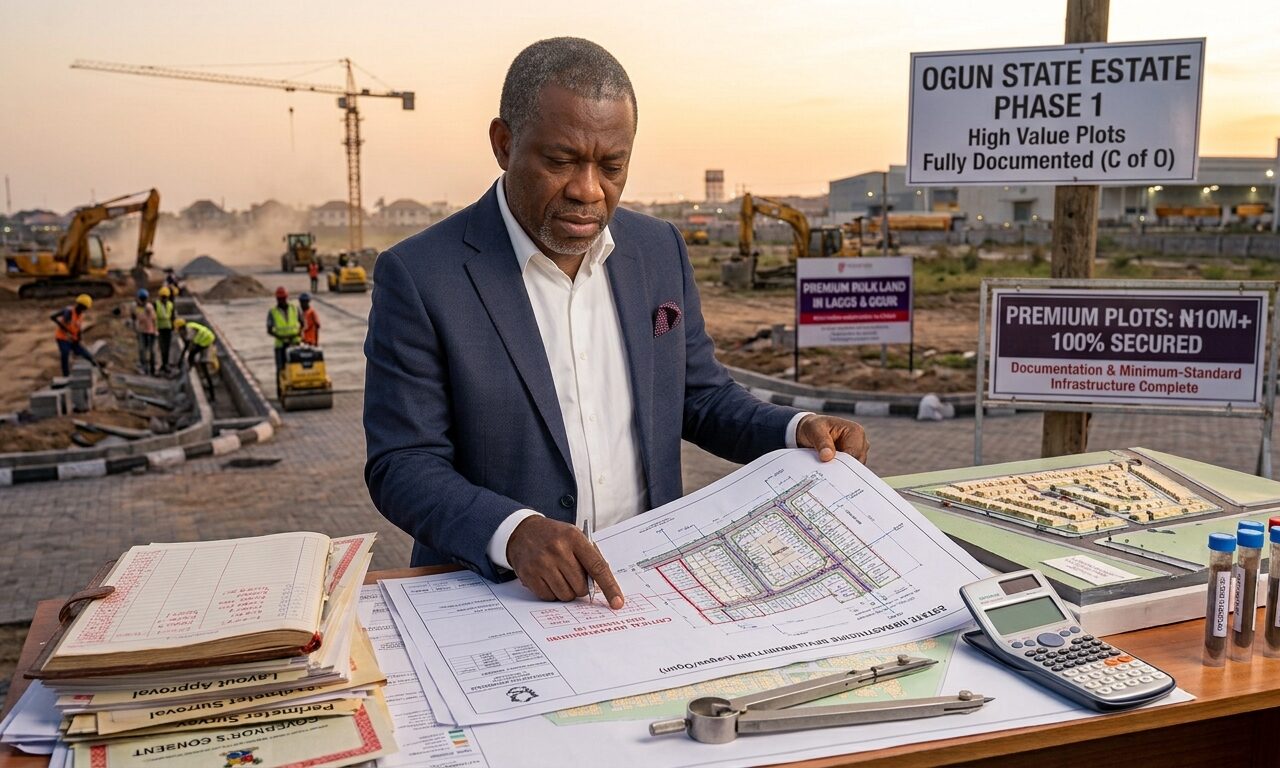

“Let me put my last post into proper perspective, based on my experience. For example, developing a 20-acre estate in Ogun State could cost you over ₦500 million for documentation alone, depending on the location, and over ₦700 million for minimum standard estate infrastructure.
If 20 acres gives you 120 plots and you sell each plot for ₦5 million, your total revenue is ₦600 million before deducting agents’ commissions and other sales-related expenses. YOU ARE ALREADY IN DEBT.”
To put this into perspective, let’s break down the basic, real-world economics of developing a 20-acre estate in Ogun State, drawing directly from hands-on industry experience.
The 20-Acre Reality Check: A Breakdown
Let’s walk through a realistic financial scenario for a standard 20-acre land development project in Ogun State, Nigeria.
1. Land Yield & Revenue Potential
- Land Area: 20 Acres
- Plot Yield: Approx. 120 plots (after accounting for roads, green areas, commercial zones, and utility space)
- Target Selling Price: ₦5,000,000 per plot
- Gross Projected Revenue: $120 \times ₦5,000,000 = \mathbf{₦600,000,000}$
At ₦600 million in potential revenue, it sounds like a profitable venture. But let’s look at the actual costs required to make those plots marketable.
The Hidden Costs: Capital Before Infrastructure
2. Documentation & Statutory Expenses
Depending on the specific location within Ogun State, obtaining proper titles, perimeter surveys, layout approvals, governor’s consent, and regulatory documentation can easily exceed:
Documentation Cost: ₦500,000,000+
Success with one project does not automatically mean you understand every aspect of real estate development. Market conditions change, costs rise, and larger projects demand stronger financial planning, professional expertise, and sound business structures.
3. Minimum Standard Infrastructure
Buyers in today’s market demand basic amenities before committing to a purchase. Minimum-standard estate infrastructure—such as access roads, perimeter fencing, drainage systems, gatehouses, and basic power distribution—requires significant capital:
Infrastructure Cost: ₦700,000,000+
Even if you somehow break even on paper, you still haven’t accounted for:
- Land Acquisition Cost: The original purchase price paid to the landowning family or primary seller.
- Sales & Marketing Expenses: Realtor/agent commissions (typically 5%–15%), launch events, digital ads, and signage.
- Holding Costs & Inflation: Cost of capital, interest on loans, and price fluctuations for construction materials.
The Verdict: If you set your selling price at ₦5 million per plot under these conditions, you are already in heavy debt before selling a single plot.
Key Takeaways for Developers & Investors
1. Price for Reality, Not Wishful Thinking: Your plot pricing must reflect the true total cost of development, including titles, infrastructure, and marketing—not just the raw land cost.
2. Infrastructure Is Non-Negotiable: Skimping on infrastructure lowers your brand value and slows down sales, while underbudgeting for it leads to abandoned projects.
3. Phased Development Saves Capital: If funds are tight, consider developing and servicing the estate in smaller phases rather than tackling all 20 acres at once.
4. Feasibility Over Assumptions: Always conduct a rigorous financial feasibility study with experienced engineering and real estate professionals before launching your project.
Final Thoughts
Real estate development is a rewarding venture, but only when driven by numbers, accurate budgeting, and sound engineering principles. Before you buy that next acre, make sure your financial model works from the ground up!



Leave a Reply